
Hijab Fabric Guide: How to Choose the Best Material for Every Season and Occasion
Choosing the right hijab fabric changes everything about how your hijab feels and behaves all day. The fabric decides whether it stays in place, how hot or cool you feel, whether it looks sheer under light, and how it drapes with your outfit. Most women pick a hijab by colour first and fabric last. That is backward.
This guide flips the order. It covers every hijab fabric type, how to match fabric to weather, occasion, skin type and prayer needs, how to spot good quality before you buy, and how to build a hijab wardrobe that actually works. By the end, you will know how to choose hijab fabric with confidence instead of guessing.
Quick answer: Match your fabric to four things, in order. Climate first (breathable modal or Turkish lawn for heat, warm jersey for cold). Grip second (jersey and crinkle georgette hold best without pins). How see-through it is, third (check the fabric is not sheer). Occasion last (silk and chiffon for formal events, jersey and cotton for daily wear).
What Hijab Fabric Actually Means: Fibre and Weave Basics
Before comparing fabric names, it helps to know what makes one hijab feel different from another. Two hijabs, both called chiffon, from two different brands, can feel completely different. The reason comes down to fibre content and weaving.
Natural Fibres, Synthetic Fibres and Blends
Every hijab fabric starts as one of three fibre types.
- Natural fibres such as cotton and silk come from plants or animals. They breathe well and are usually gentle on skin.
- Synthetic fibres such as polyester are made from petroleum-based chemicals. They are cheap and resist wrinkles, but they trap heat and sweat more than natural fibres.
- Semi-synthetic fibres such as modal and viscose start from natural wood pulp, then go through a chemical process to become soft, drapey yarn. They mix some of the softness of natural fibres with the consistency of a manufactured fabric.
A single hijab is often a blend, such as poly-viscose or cotton-modal. Blends borrow traits from each fibre, so a poly-viscose hijab drapes softly like viscose but resists wrinkles like polyester.
Knit Fabric Versus Woven Fabric
This is the one difference most buying guides skip, and it explains why jersey hijabs never need pins while chiffon hijabs always do.
Knit fabrics like jersey are made by looping yarn together, which gives them natural stretch and grip. A jersey hijab moulds to your head without slipping. Woven fabrics like chiffon, georgette and cotton are made by crossing threads at right angles. Woven fabric has little to no stretch, so it needs pins, magnets or an undercap to stay put.
What Is GSM and Why It Matters
GSM stands for grams per square metre, the standard way the textile industry measures fabric weight (Wikipedia, Units of textile measurement). A higher GSM means a heavier, thicker fabric. A lower GSM means a lighter, airier one.
| GSM range | Feel | Typical hijab fabric |
| 60 to 100 GSM | Very light, sheer | Chiffon, voile |
| 100 to 150 GSM | Light, breathable | Georgette, Turkish lawn, modal |
| 150 to 200 GSM | Medium, opaque | Jersey, cotton |
| 200 GSM and above | Heavy, structured | Silk satin, thick winter jersey |
Knowing the rough GSM of a fabric tells you a lot before you even touch it. A chiffon hijab at 70 GSM will almost always need an undercap for coverage. A jersey hijab at 180 GSM is usually opaque and secure on its own.
Quick takeaway: GSM and weave explain most of what you feel in a hijab. Low GSM plus a woven structure usually means sheer and slippery. Higher GSM plus a knit structure usually means opaque and secure.
The Real Reasons Your Hijab Fabric Choice Is Not Working
Most fabric frustrations trace back to one of four causes. Once you know the cause, the fix is simple.
- Your hijab keeps slipping by mid-morning. This is almost always a smooth, woven fabric. Plain chiffon, silk and plain georgette have the least natural grip. Switch to jersey or crinkle georgette, or pair the smooth fabric with an undercap and pins.
- Your hijab feels too hot or makes you sweat. Heavy or synthetic fabric traps heat against your scalp and neck. Move to a breathable fabric such as modal, Turkish lawn or lightweight cotton.
- Your hijab looks stiff and does not drape naturally. Low-quality chiffon or cheap georgette can hold a boxy shape. Better crinkle georgette, modal and Turkish lawn drape far more naturally.
- It looked different online than in real life. This is a buying-trust problem, not a fabric problem. It usually means the fabric composition was not listed clearly, or the photos were edited. The buying checklist later in this guide fixes it.
At Ruhbey, one pattern shows up again and again with first-time buyers. Most assume chiffon is the easiest fabric because it looks light and simple in photos. In reality, most customers switch to jersey or crinkle georgette after their first week, simply because those two need far less adjusting through the day.
The Main Types of Hijab Fabric, Compared
Here is a fabric-by-fabric breakdown, with honest pros and cons, so you can match fabric to your actual needs.
Jersey Hijab
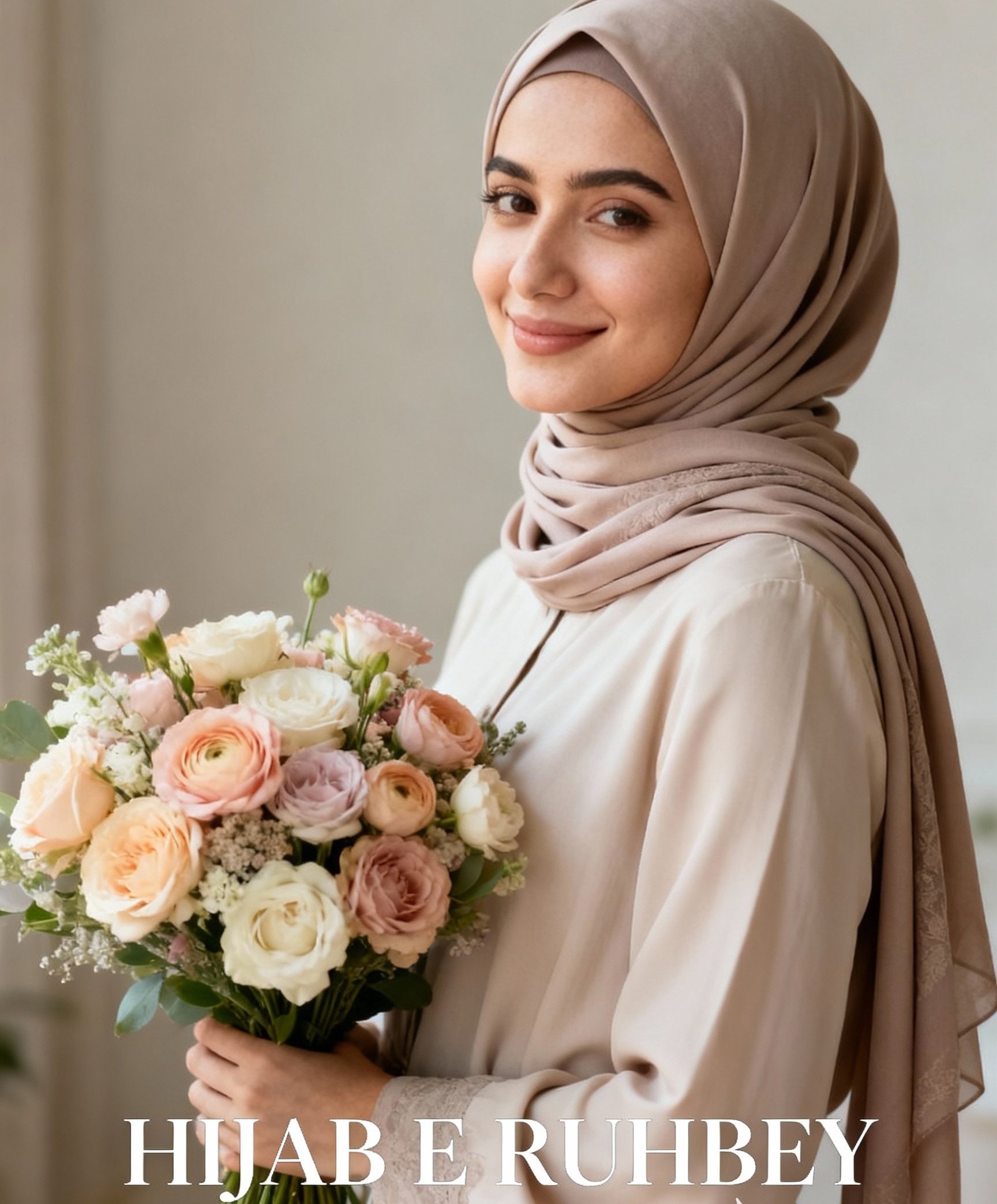
Jersey is a stretchy knit fabric, usually made from cotton, viscose or a cotton-polyester blend. It is the easiest hijab fabric to start with because it grips the head on its own.
- Strengths: stays in place without pins, soft against skin, opaque, easy to wash.
- Weaknesses: less formal-looking than silk or chiffon, and it can stretch out of shape with rough machine washing.
Choose jersey if:
- You want a grab-and-go option with no pins
- You wear hijab for 10 or more hours a day
- You need something secure for prayer, school or work
Looking for a secure, pin-free everyday hijab? Explore the Jersey Hijab Collection.
Modal Hijab
Modal is a semi-synthetic fibre made from beechwood pulp. Lenzing, the company that developed it, says its TENCEL Modal fibres come from certified wood and are made to be highly breathable and good at absorbing moisture (Lenzing, TENCEL Modal). That is why modal hijabs feel so soft and cool.
- Strengths: very soft, breathable, drapes naturally.
- Weaknesses: slightly slippery, so a cotton undercap helps with grip.
Choose modal if:
- You live in a hot or humid climate
- You have sensitive skin
- You want all-day comfort without any weight
At Ruhbey, modal orders rise every summer. Customers usually give the same reason: it feels far cooler against the neck than jersey once the weather turns hot.
Chiffon Hijab
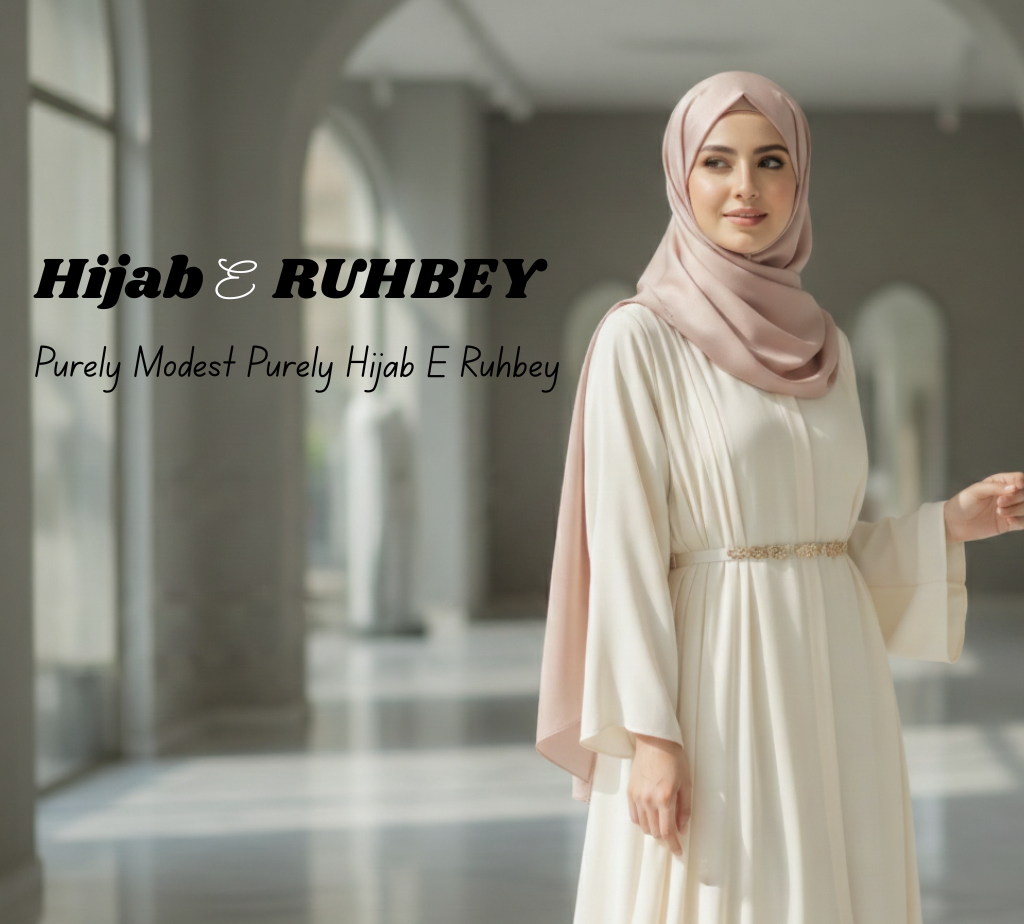
Chiffon is a lightweight, sheer woven fabric with a slight sheen. It is a long-time favourite for formal looks because of how it flows.
- Strengths: elegant drape, lightweight, breathable.
- Weaknesses: sheer, needs an undercap, and slips without pins or magnets.
Choose chiffon if:
- You are dressing for a wedding, Eid or evening event
- You want a flowing, layered look
- You do not mind using pins and an undercap
Georgette and Crinkle Georgette Hijab
Georgette is a textured woven fabric with a slightly grainy surface. Crinkle georgette adds a crinkle texture that grips much better than plain georgette. In Pakistan and much of South Asia, georgette is called jorjat, and crinkle georgette is one of the most popular everyday hijab fabrics in the region.
- Strengths: natural grip from its texture, elegant matte finish, low maintenance.
- Weaknesses: slightly less soft against skin than jersey or modal.
Choose georgette if:
- You want a polished look for office or university
- You need daily wear that still looks a little dressy
- You want more grip than chiffon without switching to jersey
Want a daily fabric with a polished finish? Explore the Georgette Hijab Collection.
Turkish Lawn Hijab
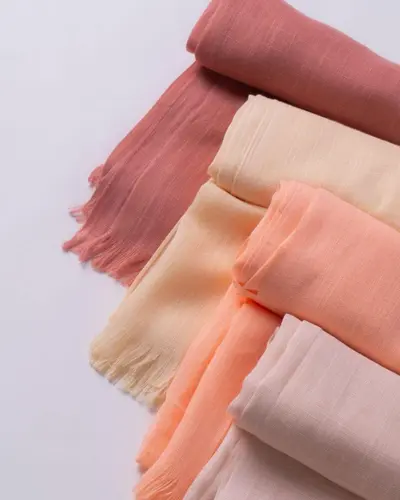
Turkish lawn is a finely woven, breathable fabric built for hot climates. It holds a crisp, polished drape without much ironing.
- Strengths: very breathable, holds shape without feeling heavy.
- Weaknesses: wrinkles more easily than georgette when packed tightly.
Choose Turkish lawn if:
- You live somewhere hot and humid most of the year
- You spend long hours outdoors
- You want a crisp look without ironing every day
Need something built for real heat? Explore the Turkish Lawn Hijab Collection.
Cotton Hijab
Cotton is a natural, breathable fibre used in clothing for centuries. It is one of the most skin-friendly hijab fabrics you can buy.
- Strengths: breathable, gentle on skin, easy to wash.
- Weaknesses: wrinkles easily, and feels heavier once it absorbs sweat.
Choose cotton if:
- You have sensitive or acne-prone skin
- You are choosing a hijab for a child
- You want the simplest fabric to wash and care for
Silk and Satin Hijab
Silk is a natural fibre with a smooth, glossy finish. Satin usually refers to a weave, made from silk, polyester or a blend, that gives a similar shine at a lower price. Both are classic choices for formal occasions.
- Strengths: luxurious shine, elegant drape, photographs beautifully.
- Weaknesses: slippery, needs pins and an undercap, and needs careful hand washing.
Choose silk or satin if:
- You are attending a wedding, nikkah or walima
- You want a hijab that photographs well
- You are fine with pins and gentle hand washing
Planning a wedding or Eid look? Explore the Silk Hijab Collection.
Bamboo and Viscose Hijab
Bamboo fabric and viscose (also called rayon) are made from plant pulp. They are marketed as eco-friendly, but how green a specific fabric really is depends on how it was processed, not just on the raw material (Textile Exchange, Modal).
- Strengths: soft, breathable, biodegradable.
- Weaknesses: can wrinkle and pill faster than modal if the fibre quality is low.
Choose bamboo or viscose if:
- You want a soft, breathable option similar to modal
- Sustainability matters in your buying decision
- You have sensitive skin but want more colour and print variety
Instant or Pre-Sewn Hijab
An instant hijab is not a separate fabric, it is a styling format. It is usually lightweight bubble georgette or jersey with a cap already attached, so there is no wrapping or pinning.
- Strengths: ready in under a minute, built-in grip from the attached cap.
- Weaknesses: less styling flexibility than a regular hijab.
Choose an instant hijab if:
- You are completely new to wearing hijab
- Your mornings are rushed and you want speed over styling
New to hijab and short on time? Explore the Ready-to-Wear Hijab Collection.
A Quick Note on Fabric Names Around the World
Fabric names change by region, which is worth knowing if you shop internationally. Georgette is often called jorjat in Pakistani Urdu. What some Gulf and South Asian stores label chiffon is sometimes closer to a lightweight georgette elsewhere. Always check the fabric composition on the product page rather than trusting the name alone.
Hijab Fabric Comparison Table
| Fabric | Fibre type | Approx GSM | Grip | Breathability | Opacity | Best season | Best occasion |
| Jersey | Cotton or viscose knit | 160 to 200 | Excellent | Good | Opaque | All year | Everyday, beginners |
| Modal | Semi-synthetic (beechwood) | 100 to 140 | Fair | Excellent | Medium to high | Summer | Sensitive skin, daily |
| Chiffon | Polyester or silk weave | 60 to 90 | Low | Good | Sheer | All year, layer for formal | Occasions, events |
| Georgette (crinkle) | Polyester or viscose weave | 100 to 130 | Good | Good | High | All year | Daily, office |
| Turkish lawn | Cotton blend weave | 90 to 120 | Fair to good | Excellent | Medium to high | Summer | Hot climates |
| Cotton | Natural fibre weave | 130 to 180 | Fair | Excellent | High | Summer | Sensitive skin, kids |
| Silk or satin | Natural or synthetic weave | 80 to 150 | Low | Fair | Medium | Winter formal | Weddings, Eid |
This table uses real GSM ranges instead of star ratings, since weight and fibre type are measurable facts, not opinions.
Quick takeaway: New to hijab? Start with a jersey. Hot climate? Modal or Turkish lawn. Formal event? Silk or chiffon, paired with pins.
Fabric Versus Fabric: Direct Comparisons
These are the exact comparisons people search for, side by side.
Jersey vs Modal. Both are soft and comfortable, but they solve different problems. Jersey wins on grip and needs no pins. Modal wins on breathability and feels cooler in heat. If pin-free security matters most, choose a jersey. If staying cool in summer matters most, choose modal.
Chiffon vs Georgette. Chiffon is smoother, more sheer and more slippery. Georgette has more texture, grips better and is more opaque. Chiffon suits formal events where flow matters more than grip. Georgette suits daily wear where grip matters more than shine.
Cotton vs Turkish Lawn. Both are breathable. Cotton is softer and more familiar, but wrinkles faster and feels heavier once damp. Turkish lawn is built for heat, holds its shape better, and dries faster in humid weather.
Silk vs Satin. Silk is a natural fibre with the most authentic shine and the highest price. Satin is usually a weave, often made from polyester or a blend, that copies silk’s shine at a lower cost. Choose silk for the most premium formal option. Choose satin for a similar look at a friendlier price.
Modal vs Bamboo. Both are soft, breathable and semi-synthetic, with a similar feel. A certified modal like TENCEL has more consistent quality and a clearer sustainability record. Bamboo fabric quality varies more by maker, since not every bamboo fabric uses the same low-waste process.
A Quick Hijab Fabric Decision Guide
If you only have a minute, answer these three questions to land on the right fabric fast.
- What will you mainly use it for? Daily wear points to jersey or crinkle georgette. Prayer points to a jersey or a dedicated namaz chadar. Special occasions point to silk or chiffon.
- What is your climate right now? Hot and humid points to modal or Turkish lawn. Cold points to thick jerseys. Mild weather works well with crinkle georgette all year.
- Do you prefer pin-free styling, or are pins fine? If pin-free matters most, choose a jersey. If pins are fine, almost any fabric on this list will work.
How Fabric and Length Work Together
Fabric and length are not separate decisions. The right length depends partly on how the fabric behaves. Short lengths work best with fabrics that already grip well, like jersey, since there is less to tuck and secure.
Standard length is the safest match for almost any fabric. Longer, maxi lengths suit slightly heavier fabrics like georgette or cotton better than ultra-light chiffon, which blows around more in wind or under a fan.
How to Choose Hijab Fabric by Climate
Weather is one of the biggest factors in daily comfort.
- Hot and humid weather. Modal and Turkish lawn are the two most breathable options. Both let air move against your scalp instead of trapping heat, which matters most during long hours outdoors or in spaces without air conditioning.
- Cold weather. Thick, ribbed jersey holds warmth without bulk, so it is the most practical winter choice for daily wear. Wool-blend hijabs work for very cold climates too, though they are less common and need gentler care.
- Humid or coastal climates. Here, fabric that resists clinging to sweat matters more than fabric that simply feels light. Modal manages moisture instead of trapping it against the skin.
- Rainy or monsoon season. Quick-drying fabric saves you from a damp, heavy hijab. Jersey and Turkish lawn both dry faster than silk or thick cotton, and neither loses shape from a bit of damp the way silk can.
Quick takeaway: Hot, pick modal or Turkish lawn. Cold, pick a thick jersey. Rainy, pick jersey or Turkish lawn for faster drying.
How to Choose Hijab Fabric by Occasion
- Everyday, work and school. Jersey, crinkle georgette and cotton balance comfort, coverage and low maintenance, which matters most when you are dressing quickly.
- Formal events, weddings and Eid. Silk, satin and chiffon are the classic choices because of how they catch light and drape. Pair them with pins and an undercap for a secure, polished finish that lasts through a long event.
- Sport, gym and active wear. Look for a jersey blend with a moisture-wicking finish, or a dedicated sport hijab. Avoid stiff woven fabrics like silk or plain chiffon during exercise, since they slip more once you sweat.
- Travel. Jersey and crinkle georgette both resist wrinkles after being packed, which makes them the easiest fabrics for a bag.
Which Fabric Stays Secure for Prayer (Salah)
This is one of the most practical everyday questions for a hijabi, yet it rarely gets a direct answer. During ruku and sujood, a hijab needs to stay secure through repeated bending and forehead contact with the ground. It should also remain in place after wudu, when the hairline may be slightly damp.
- Jersey is the most reliable fabric for prayer because it naturally grips the head and usually stays in place without pins.
- Crinkle georgette is a great second choice thanks to its textured surface, which offers better grip than smooth woven fabrics.
- Plain chiffon and silk are the least secure for salah unless paired with an undercap and pins, as they can shift during movement.
- Many hijabis keep a separate namaz chadar specifically for prayer instead of using their everyday hijab.
- A soft jersey or cotton namaz chadar is comfortable, breathable, and convenient for those who pray multiple times a day at home.
Quick takeaway: Jersey holds best through ruku and sujood, even after wudu. Keep a soft cotton or jersey namaz chadar for prayer at home.
Choosing a Non-Slip Hijab Fabric
Slipping comes down to two things: how smooth the fabric surface is, and whether it has any stretch to grip the head. Smooth, non-stretch woven fabrics like plain chiffon and silk have the least resistance against gravity and movement. Textured or knit fabrics create friction that holds them in place.
Jersey and crinkle georgette are the two most reliable non-slip fabrics without any extra accessories. Chiffon, silk and satin usually need an undercap, pins or magnets to stay secure for a full day.
Undercap and Pin Pairing Guide
| Fabric | Undercap needed | Pins or magnets |
| Jersey | Usually not | Rarely needed |
| Modal | Helps with grip | Optional |
| Chiffon | Yes, for coverage and grip | Yes |
| Georgette | Optional | Optional |
| Silk or satin | Yes | Yes |
Need pins, magnets or an undercap to secure a lighter fabric? Explore Hijab Accessories.
How to Check If a Hijab Fabric Is Too Sheer
Coverage is the whole point of a hijab, so a fabric being too see-through is a real problem, not just a style choice.
The light test (do this at home):
- Hold the fabric up to sunlight or a bright lamp
- Can you see your hand or hair shape through it? Then it is too sheer
- Fix it with a second layer or an opaque undercap
When buying online:
- Check the product page for fibre content and GSM
- Read reviews for the words “see-through” or “needs a layer”
- Ask for a swatch before a big order, if the store allows it
Quick guide:
- Usually too sheer on their own: chiffon, thin voile, low-GSM modal
- Usually fine on their own: jersey, cotton, crinkle georgette
Best Hijab Fabric for Sensitive Skin
If you wear a hijab for many hours a day, the fabric touching your skin matters a lot.
- Avoid: polyester and thick synthetic blends. They trap heat and sweat, which can cause breakouts and irritation.
- Pick: cotton, modal or bamboo. They breathe, let sweat dry, and are the gentlest on skin (Healthline, Best Fabrics for Sensitive Skin).
- Where it matters most: the jawline and neck, where the hijab sits closest all day.
Getting breakouts where your hijab sits? Swap a synthetic hijab for cotton or modal for a few weeks and see if it helps. It is a simple, cheap test.
Does Your Hair Type Change the Fabric You Need?
A little, yes:
- Fine or straight hair: lighter fabrics like modal or chiffon sit fine, since there is not much bulk underneath.
- Thick hair or a bun: pick a stretchy fabric like a jersey, so the hijab does not feel tight or slide off the bun.
Best Hijab Fabric for Kids
For kids, comfort and doing it themselves matter more than looking formal.
- Best pick: jersey or soft cotton. No pins, gentle on young skin, easy to put on alone.
- Length: go shorter, so a child can manage it through a full school day without help.
- Avoid: silk and satin. They slip, need constant fixing, and are hard for small hands.
Best Hijab Fabric for Beginners
New to hijab? Start simple instead of trying every fabric at once.
- Start with a jersey. It grips on its own and rarely needs fixing.
- Or try an instant, pre-sewn hijab. It skips the wrapping step completely.
- A simple 3-piece starter set covers almost everything:
- One jersey for daily wear
- One modal for warm days
- One chiffon or satin for your first special occasion
How to Check Hijab Quality Before You Buy Online?
Most hijab shopping happens online now, so a few quick checks stop the photo from looking better than the real thing.
- Read the fabric label. “100% cotton” or “95% viscose, 5% spandex” tells you far more than the word “premium.”
- Be careful with vague words. “Silk look” or “luxury feel” with no fibre percentage is a red flag. Dig deeper first.
- Read the reviews for warnings. Search for words like slips, pilling, shrunk or see-through, not just the star rating.
- Ask for a swatch before a big first order from a new store.
Does a higher price mean better fabric? Not always. Price also comes from the brand name and markup, not quality alone. A good jersey hijab can easily beat an overpriced, thin chiffon.
At Ruhbey, new customers most often ask if a fabric will look exactly like the photo. Honestly, lighting can change how a colour looks, but the fabric type and GSM never change with photography. So checking those two things protects you far more than trusting the picture.
How to Wash and Care for Your Hijab
The wrong wash can ruin a good hijab. Here is the simple version:
- Washing:
- Jersey and cotton: gentle machine wash in a laundry bag
- Silk, satin and chiffon: hand wash in cold water
- Drying: air dry flat, away from direct sun (sun fades the colour)
- Ironing: steam silk and satin, never iron them directly. Use low heat for jersey and cotton.
- Storing: fold or roll in a dry drawer, out of sunlight. Do not hang silk for long, it loses shape.
Eco-Friendly Hijab Fabric Options
If you care about the planet too, some fabrics are greener than others. The catch: how it is made matters more than the label.
- Certified modal (like TENCEL): made from renewable beechwood and breaks down naturally (Lenzing, TENCEL Modal).
- Organic cotton: grown without the chemical pesticides used in regular cotton.
- Bamboo and viscose: hit or miss. How it is processed decides how green it really is, not just the raw plant (Textile Exchange, Modal).
One simple rule: look for a named, certified fibre brand, not a vague “eco” label. Certification is the clearest sign it is genuinely low-impact.
Building a Complete Hijab Fabric Wardrobe
A practical collection covers most seasons and occasions without excess:
- Two or three jersey hijabs in neutral shades for daily wear and prayer
- One modal hijab for hot weather and sensitive-skin days
- One crinkle georgette hijab for office or semi-formal days
- One silk or chiffon hijab for weddings, Eid and formal events
- One namaz chadar in soft cotton or jersey for prayer at home
- An undercap and a small set of pins or magnets for the lighter fabrics
Start with the basics, then expand into colours and prints once you know which fabrics you reach for most.
Shop Premium Hijab Fabric Online at Ruhbey
If you would rather skip the trial and error, Ruhbey stocks a full range of hijab fabrics already tested for grip, breathability and coverage. Explore the Jersey Hijab Collection for a secure, pin-free everyday option, the Georgette Hijab Collection for a polished daily drape, the Turkish Lawn Hijab Collection for hot-weather comfort, the Silk Hijab Collection for weddings and Eid, and the Namaz Chadar Collection for prayer. There is also a Ready-to-Wear range for beginners and busy mornings, plus Hijab Accessories like pins and undercaps for the lighter fabrics.
[Shop Now]
Conclusion
Choosing hijab fabric comes down to a few honest questions, not a long list of names to memorise. Start with your climate, since heat and humidity change comfort more than almost anything else. Add your grip preference, since some fabrics need pins and others do not. Check how see-through it is, so coverage is never a guess. Then let the occasion guide your final pick, from a simple jersey for the school run to a flowing silk for a wedding.
Once you understand fibre, weave and GSM, choosing between jersey, modal, chiffon, georgette, Turkish lawn, cotton and silk stops feeling confusing. Start with one versatile everyday fabric (most people land on jersey or crinkle georgette), then build outward by season and occasion as you learn what you actually reach for.
Frequently Asked Questions
What is the best hijab fabric for everyday wear? Jersey, because it grips the head without pins, stays opaque, and holds up well to daily washing. Crinkle georgette is a strong second for a slightly more polished look.
Which hijab fabric does not slip? Jersey and crinkle georgette slip the least, since both have natural texture or stretch that grips the head. Smooth woven fabrics like plain chiffon and silk need pins or an undercap for the same security.
What is the best hijab fabric for hot weather? Modal and Turkish lawn. Both are highly breathable and let air move against the scalp instead of trapping heat.
Is chiffon or jersey better for a hijab? It depends on the goal. Jersey is better for everyday comfort, grip and low maintenance. Chiffon is better for a formal, flowing look at events, but it needs an undercap and pins to stay secure.
How do I know if a hijab fabric is too sheer? Hold it up to bright light or sunlight. If you can clearly see your hand or hairline through it, the fabric needs an undercap or an extra layer.
What is the difference between georgette and chiffon? Georgette has a slightly textured, grainy surface that grips better and is less slippery. Chiffon is smoother, more sheer, and gives a lighter, more flowing drape that suits formal occasions better than daily wear.
What is jorjat in English, and is it the same as chiffon? Jorjat is the Urdu name used in Pakistan for georgette. It is not the same as chiffon. Georgette has more texture and grip, while chiffon is smoother and more sheer.
What is the best hijab fabric for beginners? Jersey, since it needs no pins and rarely needs readjusting. An instant, pre-sewn hijab is a good alternative for the first few weeks.
What fabric is best for a hijab to wear at home or to sleep in? Soft, breathable jersey or cotton, since both are gentle on skin for long wear and stay comfortable without pins overnight.
Which hijab fabric is best for prayer? Jersey, since it stays secure through ruku and sujood even after wudu leaves the hairline damp. A soft cotton or jersey namaz chadar is a practical alternative for prayer at home.